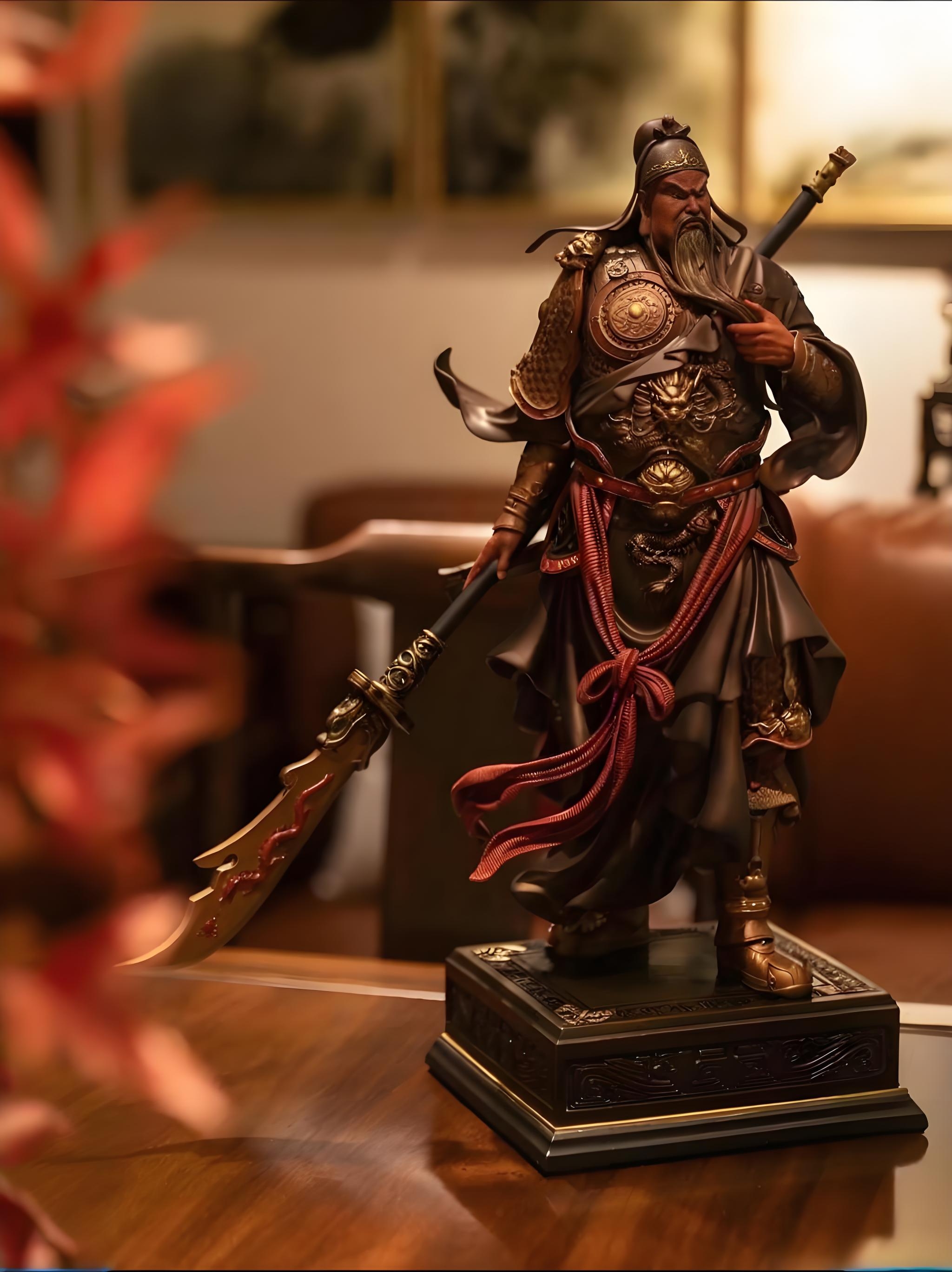
The Dao-Tong (Orthodox Tradition) of Huaxia is not a rigid corpse nor a relic gathering dust on a high shelf. It is the vital spiritual bloodstream coursing through five millennia, a civilizational gene fused deep within the nation's bones. Like a great river surging forward, it has a source and a flow. Though weathered by countless twists and upheavals, its inner spirit has remained constant, shaping the unique character and enduring resilience of Chinese civilization.
The Source: The Symbiosis of "Ren" (Benevolence) and "Li" (Ritual/Propriety)
The living source of the Huaxia Dao-Tong is deeply rooted in the fertile soil of the Three Dynasties (Xia, Shang, Zhou). The Duke of Zhou "instituted rites and music" (zhi li zuo yue), integrating ethical order and aesthetic spirit into state institutions and social life. Confucius, building upon the past, edited the Six Classics. He established "Ren" (benevolence/humaneness) as the core and "Li" (ritual/propriety) as its outward expression, constructing an ethical framework supported by the pillars of "Ren, Yi (Righteousness), Li, Zhi (Wisdom), and Xin (Trustworthiness). Mencius further elevated this tradition, declaring "The people are the most important; the state comes next; the sovereign is the least important" – a clarion call echoing powerfully through history's halls. Xunzi, emphasizing "transforming innate nature through conscious effort" (hua xing qi wei) and "exalting ritual and emphasizing law" (long li zhong fa), infused the Dao-Tong with practical rationality. Though the Hundred Schools of Thought offered diverse paths, they collectively wove the essential spiritual fabric of Huaxia civilization.
The Resilience: Renewal Through Inclusivity
The Huaxia Dao-Tong is not a closed, rigid fortress but a remarkably inclusive living organism. Han Dynasty Confucian Classics, though briefly canonized as orthodoxy, explored concepts like "the interaction of Heaven and humankind" (tian ren gan ying) to bridge nature and ethics. Wei-Jin Metaphysics (Xuanxue), seemingly advocating "transcending conventional morality to follow nature" (yue ming jiao er ren zi ran), actually represented a higher-level fusion of Confucian and Daoist thought within a new historical context. When Buddhism arrived from India, its profound teachings on mind and nature were absorbed and transformed by native wisdom, eventually becoming a vital source for the Neo-Confucian "Mind, Nature, and Heavenly Principle" (xin xing tian li) philosophy of the Song and Ming dynasties. Great scholars like Cheng Hao, Cheng Yi, and Zhu Xi, grounding themselves in Confucius and Mencius while synthesizing Buddhist and Daoist insights, constructed the grand philosophical system of "Principle is one, its manifestations are many" (li yi fen shu), elevating Confucian Dao-Tong to new theoretical heights.
The Soul: Transmission Through Everyday Life
The enduring vitality of the Dao-Tong lies in its deep roots in the soil of the nation's daily life. It is not merely subtle meanings in ancient texts but an ethical consciousness and human warmth experienced unconsciously by the common people in their everyday existence. It is the natural affection between parents and children, the care and support within families; the mutual aid and solidarity among neighbors; the principle of "extend the respect for the aged in one’s family to that of others; extend the love for the young in one’s family to that of others"; the sense of responsibility embodied in "be the first to bear hardship, the last to enjoy comfort." From the folk tales of the "Twenty-Four Paragons of Filial Piety" to the earnest instructions of "Zhu Xi's Family Maxims," the spirit of the Dao-Tong has long been transformed into the pulse of the nation's bloodline. It nourishes silently, like spring rain moistening all things.
The Relevance: Perpetual Renewal in Answering the Age
The Huaxia Dao-Tong is absolutely not a relic for mere nostalgic reverence. Its true value lies in offering profound wisdom to illuminate the challenges of our time. Faced with the myriad dilemmas of modernity – the imbalance between material and spiritual pursuits, the tension between technology and ethics, the alienation of the individual from community – the Dao-Tong provides invaluable resources for seeking transcendence and balance. Its worldview of "the unity of Heaven and humankind" (tian ren he yi); its value system of "regulating profit with righteousness" (yi yi zhi li); its wisdom of "harmony in diversity" (he er bu tong); and its practical character of "applying knowledge to real-world affairs" (jing shi zhi yong) are all crucial. It is an unquenchable lamp, illuminating our path to rebuild our spiritual homeland and forge a harmonious world.
The Huaxia Dao-Tong is the deep resonance of a nation's collective memory and the undying lamp lighting the path to the future. With "Ren" as its soul and "Li" as its form, it persists through inclusivity and grows within daily life. This vast cultural current has long transcended the rise and fall of dynasties, transforming into a profound civilizational consciousness flowing silently in the blood of every descendant of Yan and Huang.
As modern China stands anew on the world stage, the ancient Dao-Tong's spirit of benevolence, its wisdom of harmony and centrality, and its concern for all under heaven (tian xia qing huai) become our deepest wellspring of strength in confronting complex challenges. It tells us wordlessly: True inheritance lies in transforming the bloodline of millennia into the light beneath our feet today. Forms may be remolded, but the spirit endures – this is the imperishable code of civilization.